
Insulated vs Non-Insulated Garage Doors: Worth It in Southern California?
The question everyone actually means
When a homeowner in Norwalk asks whether they should pay more for an insulated garage door, what they are really asking is simple. Is the extra money going to do anything for me, or is it just a nicer number on the brochure? It is a fair question, because insulation adds real cost and the benefit depends entirely on how you use the garage. In some setups it is money well spent and in others it is a feature you will never notice. This post is meant to help you tell which one you are.
Southern California makes this trickier than it is in, say, Minnesota. We do not fight subzero winters here, so nobody is buying an insulated door to keep pipes from freezing. What we are dealing with is heat, noise, and a lot of garages that have quietly turned into living space. Those three things are where insulation earns its keep in a place like Norwalk 90650.
What R-value really means
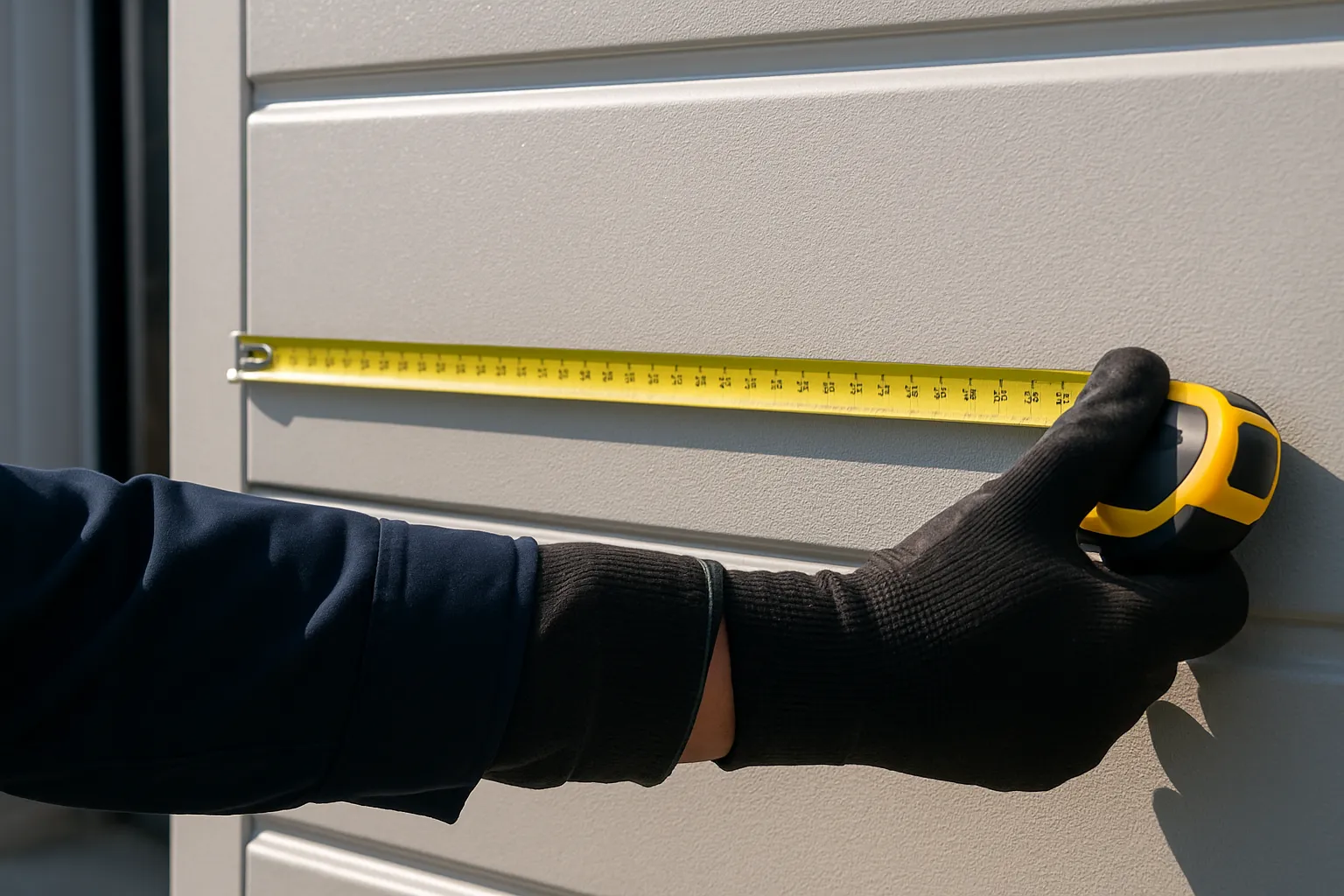
You will see doors advertised with an R-value, and the higher the number, the more the door resists heat moving through it. That is the whole concept. A basic single-layer steel door, just one skin of metal with nothing behind it, is essentially R-0 to a very low number. It stops almost nothing. Step up to a double-layer door with polystyrene foam inside and you are looking at roughly R-6 to R-9. Go to a premium triple-layer door with polyurethane foam and you can reach R-12, R-16, or even higher.
Here is the honest caveat most salespeople skip. A garage door is full of gaps around the edges, and it is only one wall of the garage. So the R-value of the door is not the R-value of the room. A very high R-value door on a garage with an open gap under it and uninsulated walls is not going to perform like the sticker suggests. R-value tells you how good the door itself is. Whether that translates into a cooler, quieter garage depends on the rest of the space.
Planning a concrete project in Norwalk or the East Bay? Get a free, no-obligation on-site estimate and a written flat-rate price.
What insulation actually does for you in SoCal
Forget winter. In our climate insulation does three things worth caring about. First, it slows summer heat gain. Inland Norwalk afternoons get hot, and a west or south facing garage with a bare metal door turns into a radiator that dumps that heat into the space and often into the rooms next to it. An insulated door does not make the garage cold, but it noticeably takes the edge off and keeps the adjoining rooms easier to cool.
Second, it makes the door quieter and steadier. The foam core deadens the rattle and hum, so the door opens and closes with a solid sound instead of a hollow bang. If there is a bedroom over or beside the garage, this alone changes how the house feels at six in the morning. Third, an insulated door is simply sturdier. That foam bonds the layers together, so the door flexes less, dents less, and holds up better against the daily temperature swings between our damp coastal mornings and hot afternoons.
When it matters a lot, and when it barely matters
The single biggest factor is what sits on the other side of that door. If the garage is attached to the house, shares a wall with a bedroom, has a room built above it, or has been converted into an ADU or living space, insulation matters a great deal. In those cases the garage is thermally part of your home, and heat or cold moving through the door is heat or cold your air conditioner has to deal with. This is huge in Norwalk, where garage-to-ADU conversions are everywhere. The moment someone is sleeping or working in that space, a bare single-layer door becomes the weakest wall in the house.
On the flip side, if you have a detached garage out back that stores a car, some tools, and holiday boxes, and nobody spends time in there, insulation is mostly wasted money. There is no conditioned space to protect and no bedroom to keep quiet. The heat that builds up in an unused detached garage does not cost you anything on the utility bill. In that situation a solid non-insulated door does the job for less.
The cost and the payback
Insulated doors cost more, and there is no way around that. A new garage door installed generally runs $850 to $2,200, and where you land in that range depends heavily on insulation. A basic non-insulated single-layer steel door sits near the bottom. A well-insulated double or triple-layer door pushes toward the top. You are usually paying a few hundred dollars extra for the insulated version of the same door.
| Door type | Rough R-value | Where it lands in $850-$2,200 |
|---|---|---|
| Single-layer, non-insulated | R-0 to low | Lower end |
| Double-layer, insulated | R-6 to R-9 | Middle |
| Triple-layer, insulated | R-12 to R-18+ | Upper end |
Now about payback. If the garage is unconditioned and detached, the energy savings are close to zero and you will never earn back the premium in dollars. If the garage is attached or converted, the math flips. You are reducing the load on your AC and making adjoining rooms more comfortable, and the comfort alone tends to justify it for most people. Just be realistic. Insulation is a comfort-and-noise upgrade in our climate far more than it is an energy-bill slasher.
A simple way to decide
You do not need a spreadsheet for this. Insulation is worth it if the garage is attached to the house, if it shares a wall or ceiling with a bedroom or living room, if it has been converted or you are planning to convert it into an ADU, gym, office, or any space where people spend time, or if the noise of the door bothers someone inside. Any one of those is a good reason to spend the extra few hundred dollars.
You can comfortably skip insulation if the garage is detached and sits away from the house, if nobody uses it as a living or working space, and if it just stores vehicles and stuff. In that case a good non-insulated door gives you everything you need. And if you are somewhere in the middle, lean toward at least a double-layer door. It is the safe middle choice, it costs only a little more, and it covers you if that garage ever becomes something more, which around here it often does.
The Norwalk angle, and what to do next
Norwalk gives you the worst of both temperature worlds in a single day. Cool, damp marine mornings and hot, dry inland afternoons. A bare metal door does nothing to buffer that swing, so the garage tracks the outside temperature almost exactly. For a storage garage, who cares. For the growing number of converted garages in this city, that swing is the difference between a comfortable room and one that is freezing at dawn and stifling by three in the afternoon.
So the real trigger is not the weather, it is the use. Before you buy, ask yourself what that garage is going to be for the next ten years, not just today. If there is any chance it becomes an ADU or a room someone lives in, insulate now while the door is already coming off. Retrofitting later costs more than doing it once. If you want help sizing this up for your specific home, our garage door installation page covers the options, and you can talk it through with a local tech at (562) 667-4784. For the full price picture see our guide to new garage door cost, and if you are still deciding whether to upgrade at all, our breakdown on whether to repair or replace a garage door is a good next read.
Questions, Answered
Is an insulated garage door worth it in Southern California?
It depends on the garage. If it is attached, shares a wall or ceiling with a living space, or has been converted into an ADU, then yes, insulation is worth it because it cuts summer heat gain into your home and quiets the door. If it is a detached, unused storage garage, insulation is mostly wasted money here since we do not deal with hard winters.
What R-value do I need for a garage door in Norwalk?
For an attached garage or a converted living space, a double-layer door in the R-6 to R-9 range is a solid baseline, and a triple-layer door at R-12 or higher is better if the room is used heavily. For a detached storage garage you do not really need any meaningful R-value. Remember the door is only one wall, so a high number alone will not condition a leaky garage.
How much more does an insulated door cost?
New garage doors installed generally run $850 to $2,200, and insulation is one of the main things that moves you up that range. A non-insulated single-layer door sits near the bottom, while a well-insulated double or triple-layer door is usually a few hundred dollars more for the same style. The exact gap depends on the material and layer count you choose.
Will an insulated garage door lower my energy bill?
In our climate, only modestly and only if the garage is attached or conditioned. An insulated door reduces how much afternoon heat pushes into adjoining rooms, which eases the load on your AC. But it is better thought of as a comfort and noise upgrade than an energy-bill slasher. For a detached, unconditioned garage the energy savings are essentially zero.
Does insulation make a garage door quieter?
Yes. The foam core dampens vibration and gives the door a solid feel instead of a hollow rattle, so it opens and closes more quietly. This is a real benefit if there is a bedroom above or next to the garage, or if the garage has been converted into a space where people sleep or work. The heavier, bonded construction also flexes and dents less.
I'm converting my garage into an ADU. Should I insulate the door?
Absolutely. Once people are living or working in that space, the garage door becomes the weakest thermal wall in the room, and a bare single-layer door will make it cold on marine mornings and hot on inland afternoons. Since garage conversions are common in Norwalk, this is the clearest case for insulation. Do it while the door is already being replaced, since retrofitting later costs more.

Need Help in Norwalk?
Garage Door Pro Norwalk provides fast, same-day garage door repair across Norwalk, CA and the surrounding area — flat-rate pricing, licensed and insured, with 24/7 emergency service. Landed on this article from a search? Head back to our homepage to see everything we do, or reach out now.