
How Long Does a Garage Door Last? (Springs, Openers, and Cables Too)
The short answer, and why it is complicated
People call us asking one simple question. How long is this garage door supposed to last? The honest answer is that a garage door is not one thing. It is a system, and every part of that system wears out on its own schedule. The door panels can outlive the springs three times over. The opener might die while the door itself still looks brand new. So when somebody says their door is thirty years old, that usually means the steel is thirty years old and almost everything else has been swapped at least once along the way.
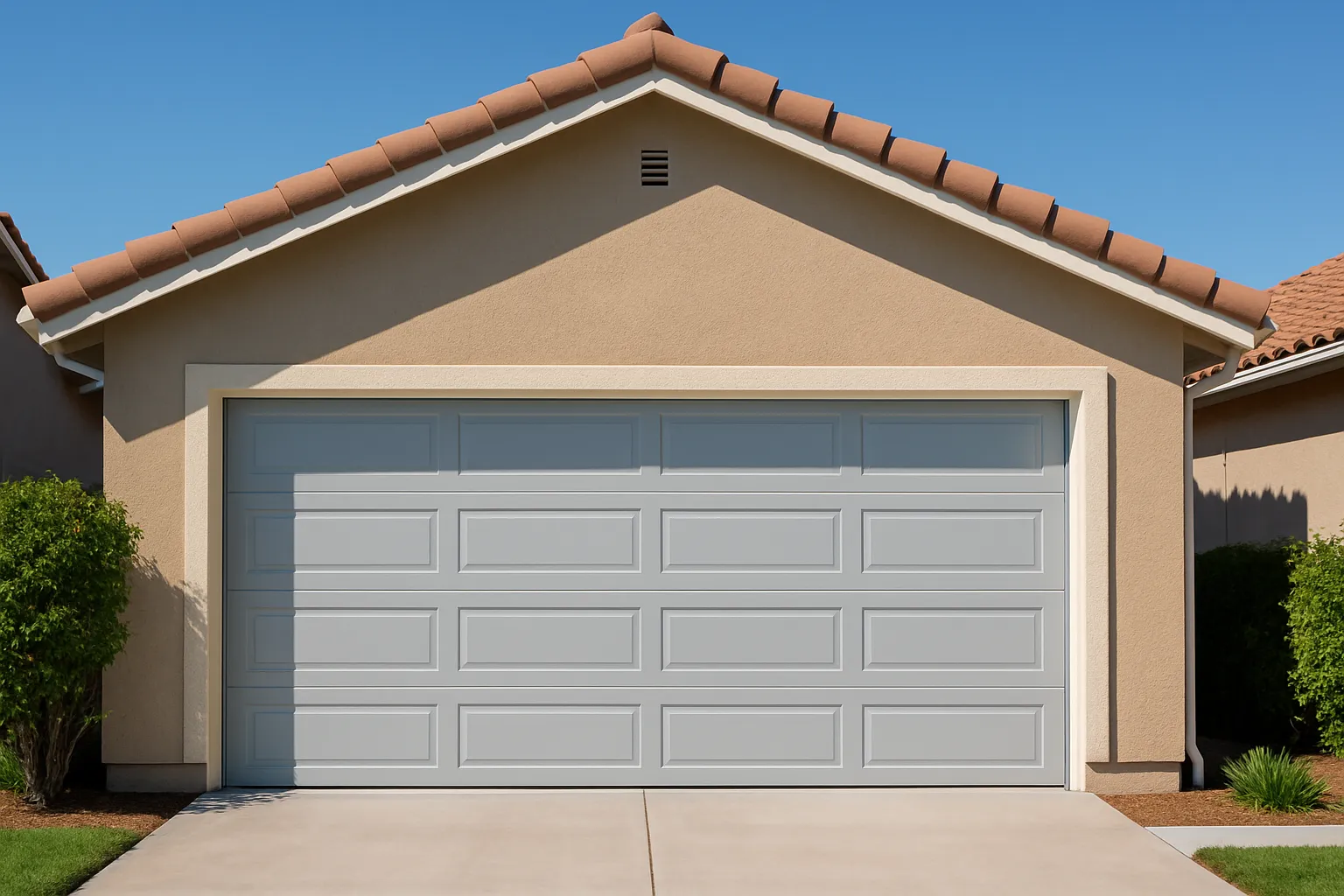
Here in Norwalk that matters more than most places. A lot of the homes around 90650 are postwar tract houses from the 1950s, and we still run into original doors that are pushing sixty years old. The panels survive because steel and old-growth wood are tough. The moving parts underneath them do not get that luxury. Below is a realistic breakdown of what each piece actually lasts, followed by what quietly eats those numbers alive in a coastal Los Angeles County climate.
Lifespan by part, in plain numbers
Here is what we tell homeowners to expect from each component under normal residential use. Normal means roughly three to five open-and-close cycles a day, a door that gets serviced now and then, and a garage that is not doing double duty as the main entrance to the house.
| Component | Typical lifespan | What pushes it lower |
|---|---|---|
| Steel door (panels) | 20 to 30+ years | Rust, dents, coastal salt air |
| Wood door | 15 to 25 years | Moisture, warping, sun |
| Torsion or extension springs | 7 to 12 years (~10,000 cycles) | Heavy daily use, rust |
| Opener (motor unit) | 10 to 15 years | Straining against a bad spring |
| Cables | 8 to 15 years | Humidity, fraying, rust |
| Steel rollers | 5 to 10 years | No lubrication |
| Sealed nylon rollers | 15 to 20 years | Rare, mostly impact damage |
| Safety sensors | 10 to 15 years | Bumps, moisture, wiring |
| Opener backup battery | 2 to 5 years | Heat, age, deep discharge |
Notice how the springs and the opener land in a similar window. That is not a coincidence. A worn spring forces the opener to lift more weight than it was designed for, and that extra strain shortens the motor's life too. Fix the cheap part on time and you protect the expensive part.
Planning a concrete project in Norwalk or the East Bay? Get a free, no-obligation on-site estimate and a written flat-rate price.
Springs are the part that fails first
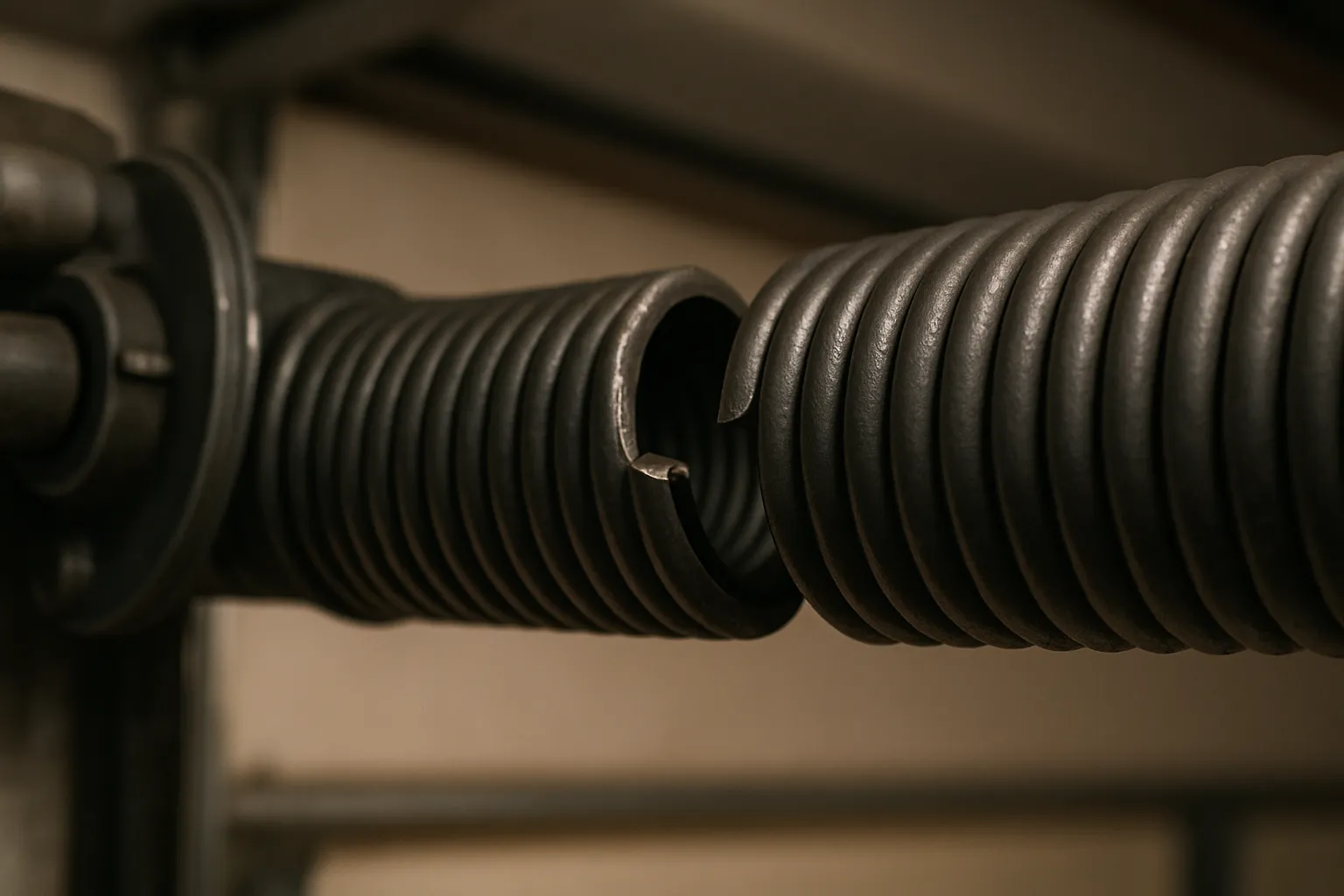
If you are going to replace one thing on a garage door in its lifetime, it is almost always the springs. Most residential springs are rated for about 10,000 cycles. One cycle is a single open plus a single close. For an average family that opens the door four or five times a day, ten thousand cycles works out to somewhere around seven to twelve years. That is the whole ballgame right there.
Now cut that number if your garage is the door everyone actually uses. When the garage is the main way in and out of the house, or when it has been converted into an ADU with people coming and going all day, you can burn through those cycles in five or six years instead of ten. We see this constantly in Norwalk where garage-to-living-space conversions are everywhere. The door gets used like a front door, so it wears out like one.
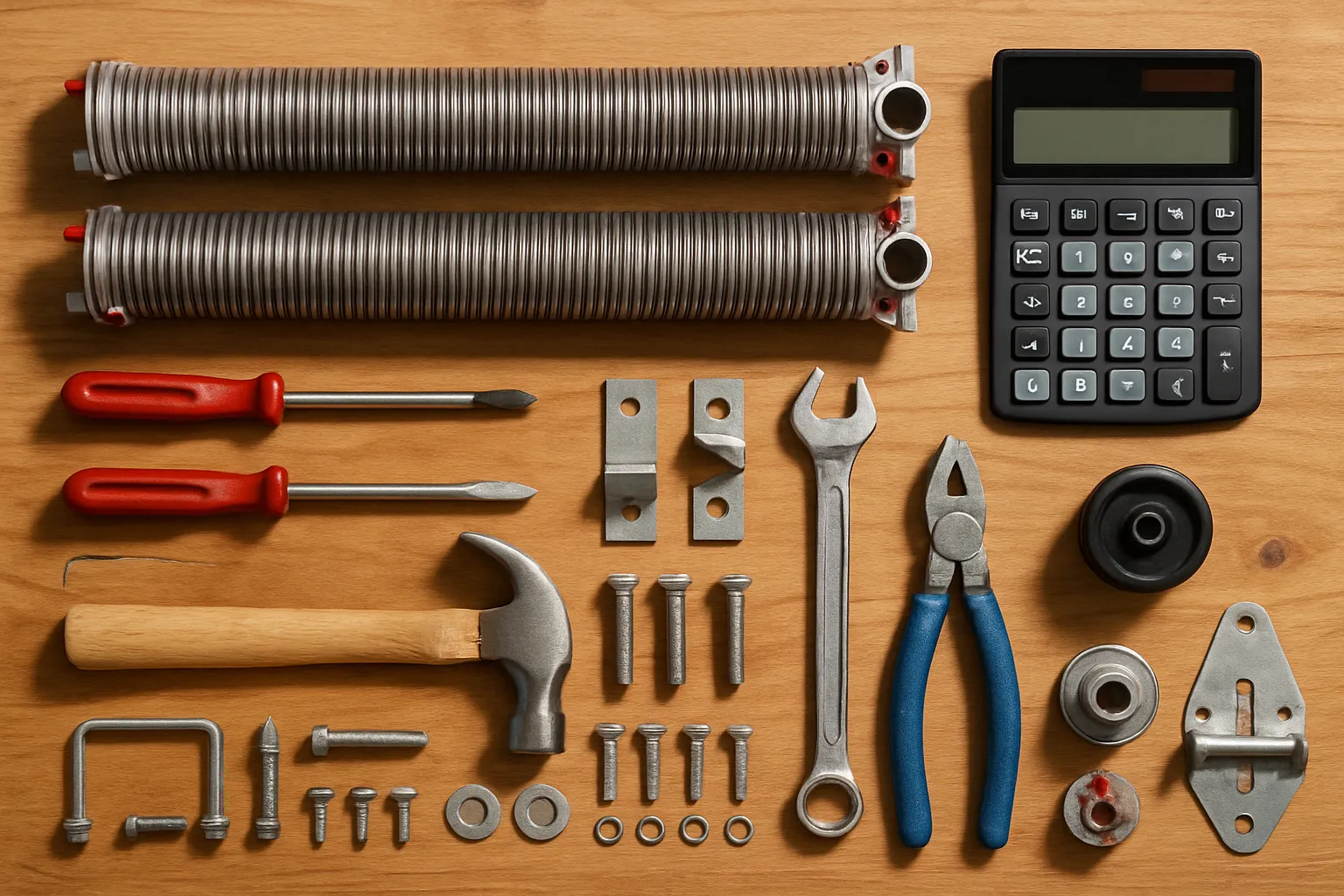
A single torsion spring replacement generally runs $200 to $320, and a two-spring system lands around $300 to $450. If your door has two springs and one has snapped, replace both. The second one is the same age and running on the same clock, and paying a tech to come out twice makes no financial sense. You can read the full breakdown on our garage door spring replacement page.
What the Norwalk climate does to these numbers
The lifespans in that table assume an average American garage. Norwalk is not average. We sit close enough to the coast to catch the marine layer that rolls in most mornings, and that damp, salty air is quietly brutal on steel. Cables and springs are bare metal under tension, and humidity is exactly what starts the rust that makes them fail early. A cable that might last fifteen years in dry Arizona air can start fraying here at eight or nine.
Then the afternoon flips the script. Inland Norwalk bakes in the summer, and a garage with a metal door on the west side can turn into an oven. That daily swing from cool damp morning to hot dry afternoon makes metal expand and contract over and over, and that cycle fatigues springs faster than steady temperatures ever would. Add the high cycle counts from all the converted garages in the neighborhood and you have a recipe for hardware that ages faster than the manufacturer ever promised. None of this means your door is defective. It just means the local climate is charging a tax on every moving part.
How to actually make it last longer
The good news is that most of what shortens a garage door's life is preventable, and it does not take much. The single highest-value thing you can do is lubricate the moving metal a couple of times a year with a proper garage door lubricant, not WD-40, which is a cleaner and not a real lubricant. Hit the springs, the rollers, the hinges, and the bearings. In a humid coastal climate this one habit does more to fight rust than anything else.
The second thing is a balance check. Once or twice a year, pull the release cord with the door about halfway up and let go. A properly balanced door barely moves. If it slams down or shoots up, the springs are out of tune and every other part is now working harder than it should. That is your early warning to call before something snaps. We walk through the full seasonal routine in our guide to garage door maintenance in SoCal, and it is worth ten minutes of your Saturday.
The last piece is not ignoring small symptoms. A door that jerks, a new grinding noise, a cable that looks fuzzy, an opener that hesitates. These are cheap to fix today and expensive to ignore. If the opener itself is the one acting up, our garage door opener repair page covers what is usually behind it.
When replacing beats repairing
At some point pouring money into an old door stops making sense, and knowing where that line sits saves you from throwing good money after bad. A rough rule we use is that if a single repair costs more than half of what a new door would, and the door is already past twenty years old, replacement is usually the smarter call. A brand new door installed generally runs $850 to $2,200 depending on material and insulation, and it resets the clock on nearly everything at once.
The other trigger is repeat failures. If you have replaced the springs, then the cables, then the rollers over a couple of years, the door is telling you it is at the end of its service life and the parts you have not touched yet are next in line. Rust that has gotten into the panels themselves, or a door so heavy and warped that no spring keeps it balanced, also points toward replacement. When you get there, our garage door installation page lays out the options. And if you just want a straight opinion on whether your specific door is worth saving, a tech can tell you in a few minutes. Give us a call at (562) 667-4784 and we will send someone out to take a look.
A realistic timeline for a Norwalk door
Put it all together and here is how a typical door's life tends to unfold in this area. You install it, and for the first six or seven years you barely think about it. Somewhere around year seven to ten the springs go, usually with a loud bang, and you replace them. Around the same window the opener might start acting tired, and a repair or a new unit follows. The cables, aging faster because of the marine air, often need attention in that same stretch too.
Meanwhile the door panels themselves keep going. Steel that has been kept lubricated and rust-free can easily push past twenty-five or thirty years. So the pattern is not one big failure at the end. It is a series of smaller part replacements spread across the decades while the shell of the door quietly outlasts them all. If you plan for that rhythm instead of being surprised by it, a garage door is one of the cheaper systems in the house to keep running.
Questions, Answered
How often do garage door springs need to be replaced?
Most residential springs are rated for about 10,000 cycles, which for an average household works out to roughly seven to twelve years. If your garage is the main entrance or a converted ADU that gets used constantly, expect that to drop to five or six years. When one spring on a two-spring door breaks, replace both since they are the same age.
Why do garage door parts seem to rust faster in Norwalk?
Norwalk catches the coastal marine layer most mornings, and that humid, slightly salty air is what starts rust on bare metal parts like cables and springs. Those components are under tension and unpainted, so moisture attacks them directly. It is normal for cables here to show wear a few years sooner than they would in a dry inland climate.
How long does a garage door opener last?
A typical opener motor lasts 10 to 15 years. The biggest thing that shortens that is a worn spring, because the opener then has to lift far more weight than it was built for. Keeping the springs balanced and the door lubricated protects the opener. A repair usually runs $150 to $400, while a new opener installed is around $350 to $650.
Should I replace both springs even if only one broke?
Yes, on a two-spring door you should replace both at once. Both springs are the same age and have gone through the same number of cycles, so the surviving one is close behind. Replacing just the broken one means paying for another service call within a year or two when the second one fails. Two-spring replacement runs about $300 to $450.
When is it better to replace the whole door instead of repairing it?
A good rule is that if a single repair costs more than half the price of a new door and your door is already past twenty years old, replacement usually makes more sense. Repeat failures across several parts, rust in the panels themselves, or a warped door that no spring can balance are all signs the door has reached the end of its life. New doors installed run $850 to $2,200.
What is the single best thing I can do to extend my garage door's life?
Lubricate the moving metal parts two or three times a year with a real garage door lubricant, not WD-40. Hit the springs, rollers, hinges, and bearings. In Norwalk's humid coastal air this does more to fight the rust that causes early failure than anything else, and it takes about ten minutes. Pair it with a twice-yearly balance check and you will get the most life out of every part.
Need Help in Norwalk?
Garage Door Pro Norwalk provides fast, same-day garage door repair across Norwalk, CA and the surrounding area — flat-rate pricing, licensed and insured, with 24/7 emergency service. Landed on this article from a search? Head back to our homepage to see everything we do, or reach out now.