
Garage Door Making Noise? What Each Sound Means
A garage door is the biggest moving part of your house, so a little sound is normal. But a door that suddenly gets loud is telling you something, and the type of noise usually points straight at the cause.
The trick is to listen. Grinding is different from rattling, and a bang is different from a squeal. Below we break it down by sound so you can match what you hear to the likely fix, and know whether it's a five-minute DIY job or a call to a technician.
One local note. A lot of Norwalk garages sit on 1950s tract homes running original hardware, and our marine-layer humidity rusts hinges, rollers, and springs. Dry, rusty metal is noisy metal, so many of these sounds come down to parts that dried out or wore thin years ago. Springs and cables stay under tension, so those are always a pro job.
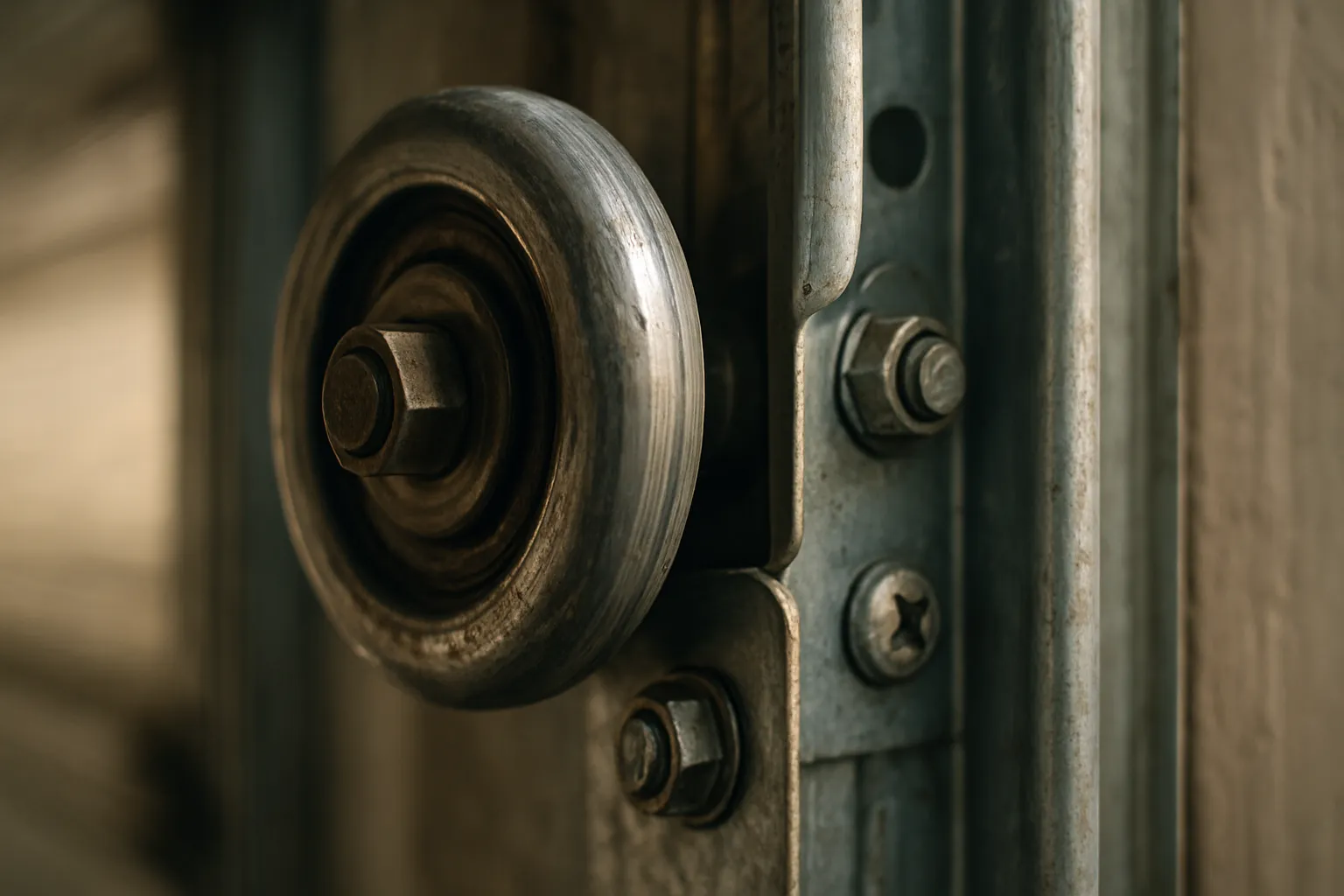
Grinding: Worn Rollers or a Dry Opener Gear
A grinding sound usually means metal dragging on metal. Two culprits:
- Worn rollers. When the nylon or the bearings inside a roller wear out, the wheel drags along the track instead of rolling. You'll often see one roller wobbling as the door moves.
- A stripped opener gear. If the grind comes from the motor head and the door barely moves, the plastic drive gear inside the opener may be stripping. That's common on older Chamberlain and LiftMaster units.
Lubricating the rollers may quiet a light grind. If a roller is cracked or a bearing is gone, it needs replacing, see roller repair. A grinding motor with little door movement points to opener repair, since the gear has to be replaced.
Rattling and Vibrating: Loose Hardware
A door that rattles or shakes as it runs almost always has loose nuts, bolts, and brackets. A garage door has dozens of fasteners, and years of vibration slowly backs them out.
- With the door closed, run a socket wrench over the visible nuts and bolts on the hinges, brackets, and track. Snug them, don't crank them.
- Check the bolts holding the track to the wall and ceiling.
- Make sure the opener rail is tight where it mounts to the ceiling bracket.
This is safe DIY and often the single best noise fix. One caution: leave the bottom-bracket bolts alone. Those are under cable tension and can injure you. If the rattle persists after tightening, a bent track or worn rollers may be the real cause.
Squealing and Squeaking: Time to Lubricate
A high squeal or squeak is the most common noise we hear, and the easiest to fix. It means the moving metal parts have dried out. In our damp climate, factory grease washes away and surface rust sets in, and dry hinges sing.
The cure is a proper lubrication, which we cover step by step in the next section. Use a garage-door lithium or silicone spray, never WD-40, which is a cleaner that dries out fast and leaves parts noisier than before. A good lube job every six months keeps a Norwalk door quiet despite the humidity.
Banging and Popping: Often a Broken Spring
A single loud bang, like a firecracker or a gunshot, is the sound we take most seriously. It's frequently a torsion spring snapping. The spring is wound under enormous tension, and when the metal finally fatigues it lets go with a sharp crack.
After a spring breaks you'll notice the door is suddenly very heavy, the opener strains or won't lift it, or the door drops fast. Springs are rated around 10,000 cycles, roughly 7 to 12 years, so this is the classic failure on aging Norwalk doors.
A softer, repeated pop as the door moves can instead be a loose hinge, a section flexing, or a roller catching. But any loud bang deserves a look. Read the signs of a broken spring, and if that's it, do not force the door, get professional spring repair.
Scraping: A Door Rubbing or Off Track
A scraping sound means the door is rubbing where it shouldn't. Look for:
- A section rubbing the frame or weatherstripping on one side.
- A roller that has partly jumped the track, so the door drags against the rail.
- A bent track section pinching the door as it passes.
If a roller has left the track or the rail is bent, the door is off-track, and running the opener will make it worse. Stop and call for off-track repair. Light rubbing against weatherstrip is harmless, but scraping metal is not.
Clicking and Straining: Opener and Balance Clues
Two more sounds worth knowing:
- Clicking or a single clunk. A rapid click from the motor head with no movement can be a failing logic board or a capacitor. A clunk as the door starts may be a worn trolley or a loose chain. These point to opener repair.
- A straining motor. If the opener labors, hums, and struggles to lift, the door is out of balance and the opener is doing work the springs should. That overworks the motor and shortens its life.
The balance test: pull the emergency release cord with the door closed, then lift the door by hand halfway. A balanced door stays put. If it slams down or flies up, the springs are worn or mis-sized, and that's a technician's job. Don't keep running an opener that strains, you'll burn it out.
A Simple Lubrication How-To
Most noise complaints improve with a ten-minute lube. Do this every six months, more often given our coastal moisture.
- Get the right product. A garage-door lithium or silicone spray. Not WD-40.
- Close the door and cut power to the opener so it can't run while you work.
- Hinges: spray the pivot point of each hinge along the door.
- Rollers: spray where the stem meets the roller, so it wicks into the bearing. Wipe drips off the wheel.
- Springs: a light coat along the torsion spring above the door quiets it and fights rust. Just coat it, don't touch or adjust it.
- Track: wipe the tracks clean of grit. Don't grease the flat track surface, that just collects dirt.
- Run the door a few times to work the lube in.
This is all DIY-safe. It won't fix worn parts, but it silences the majority of squeaks and keeps hardware from rusting in our climate.
Get a Quiet Door Again in Norwalk
If tightening and lubricating didn't do it, the noise is coming from a worn part, and some of those, springs, cables, off-track doors, are not safe to tackle yourself. Don't run a door that bangs, grinds, or strains, you risk turning a part swap into a bigger repair.
Call (562) 667-4784 for same-day service across Norwalk (90650) and southeast LA County, or request service online. For an after-hours failure, we run 24/7 emergency repair.
Questions, Answered
Why is my garage door suddenly so loud?
The most common reasons are dried-out hinges and rollers that need lubrication, loose hardware that has vibrated free, or worn rollers. Start with a garage-door lubricant on the hinges, rollers, and springs, then tighten the visible nuts and bolts. If it stays loud, a worn part is the cause.
What does it mean when my garage door makes a loud bang?
A single sharp bang, like a gunshot, is often a torsion spring snapping. You'll notice the door gets very heavy and the opener struggles or won't lift it. Do not force the door and don't try to fix the spring yourself, it's under high tension. Call a technician at (562) 667-4784.
Can I use WD-40 to quiet my garage door?
No. WD-40 is a solvent and cleaner, not a lubricant, and it dries out quickly, often leaving parts noisier. Use a garage-door lithium or silicone spray on the hinges, rollers, and springs instead. It lasts far longer and stands up to our coastal humidity.
How often should I lubricate my garage door in Norwalk?
About every six months for most doors. Because our marine-layer mornings add moisture that rusts hardware, doing it a little more often, say every four to five months, helps older Norwalk doors stay quiet and prevents rust from seizing rollers and hinges.
Is a noisy opener something I can fix myself?
Some of it. Tightening the rail mount and lubricating the chain or screw drive can quiet a lot of opener noise. But grinding with little door movement usually means a stripped drive gear, and clicking with no movement can be an electrical fault. Those need opener repair by a technician.
Need Help in Norwalk?
Garage Door Pro Norwalk provides fast, same-day garage door repair across Norwalk, CA and the surrounding area — flat-rate pricing, licensed and insured, with 24/7 emergency service. Landed on this article from a search? Head back to our homepage to see everything we do, or reach out now.