
California's Garage Door Battery Backup Law (SB-969): What Norwalk Homeowners Should Know
The Short Version for Norwalk Homeowners
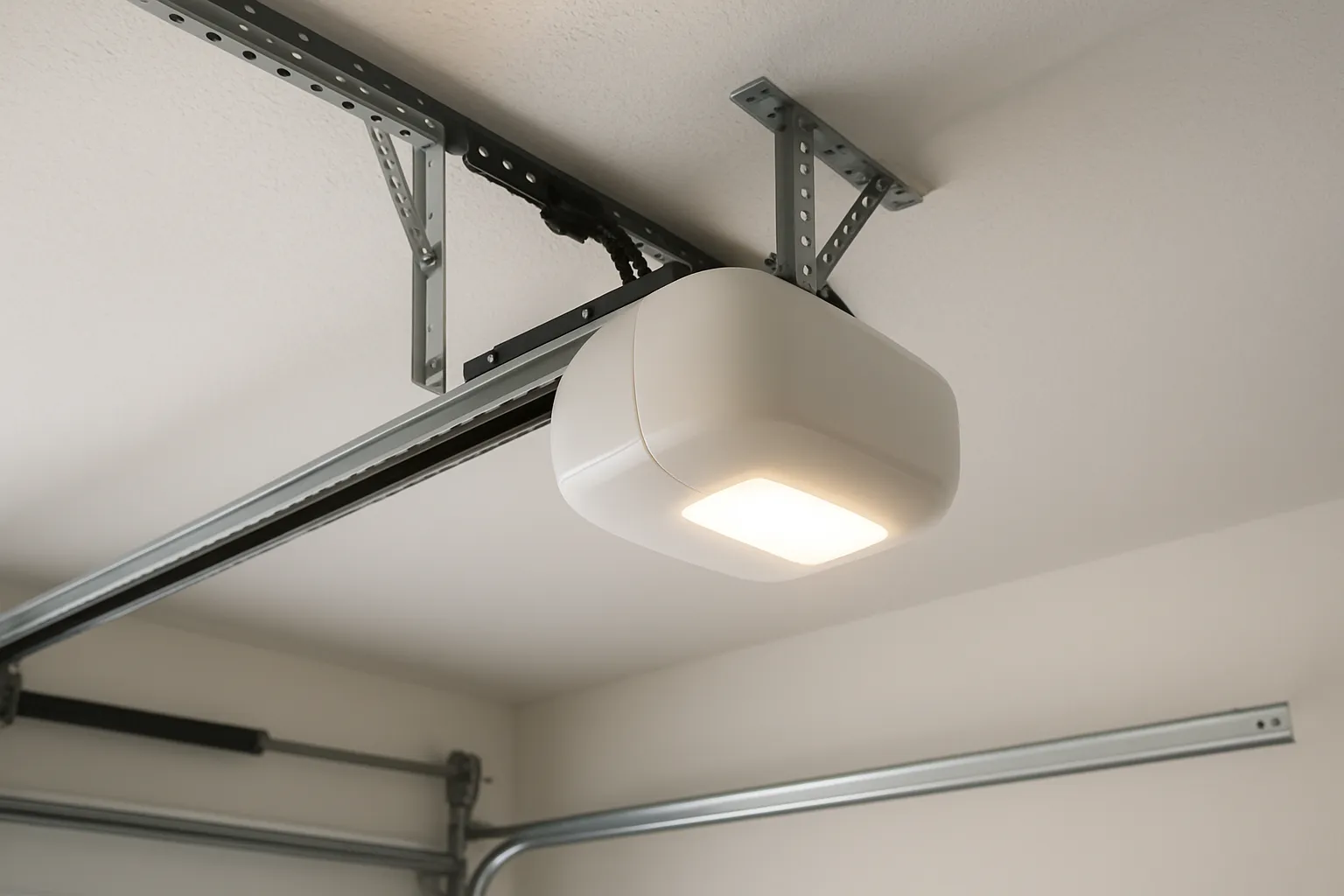
If you're replacing your garage door opener in California, the new one is required by law to have a working battery backup. That's the whole rule in one sentence. It comes from California Senate Bill 969, known as SB-969, which took effect on July 1, 2019. Since that date, no one may manufacture for sale, sell, offer for sale, or install a residential automatic garage door opener in California unless it has a functional battery backup that keeps the door working during a power outage.
Here's what tends to confuse people, so let's clear it up right away. The law is not retroactive. If you have an older opener that still runs fine, you are not required to rip it out or upgrade just to add a battery. Nobody is coming to inspect your garage. The requirement kicks in the moment you buy, install, or replace an opener. So the practical takeaway for a Norwalk homeowner is simple: keep using what works, but the day you need a new opener, it'll come with battery backup built in, because that's the only kind that can legally be sold and installed here now.
Why California Passed This Law
This wasn't a random regulation. SB-969 was a direct response to the devastating 2017 California wildfires. During those fires, utilities cut power across wide areas, and people trying to evacuate found they couldn't get their cars out. Their electric garage doors wouldn't open because the power was gone, and in the chaos of a fast-moving fire, not everyone knew about or could reach the manual release cord. Some people were trapped by a door, of all things, during an emergency where every second counted.
Lawmakers looked at that and decided a garage door that dies with the grid is a safety problem, not just an inconvenience. A battery backup means the door keeps opening and closing even when the power is out, so a family can get out fast. When you frame it that way, the law makes a lot of sense, especially in a state that now plans for wildfire season every single year.
Planning a concrete project in Norwalk or the East Bay? Get a free, no-obligation on-site estimate and a written flat-rate price.
What This Means Here in Southeast LA County
Norwalk isn't up against the tree line the way foothill communities are, but the reason this law matters locally has less to do with flames at your door and more to do with the power going out. Southern California Edison and other utilities now run Public Safety Power Shutoffs, or PSPS events, during high fire-risk weather. They deliberately cut power to reduce the chance that equipment sparks a fire in dry, windy conditions. Those shutoffs can hit large parts of LA County, and they can last hours or even a day or more.
When the grid goes dark during a PSPS event, or during any ordinary outage from a storm or a blown transformer, a garage door with no battery backup becomes a heavy manual door until the lights come back. If you've ever tried to lift a double door by hand, you know it's not fun, and it's genuinely hard for a lot of people. A battery backup keeps the opener running through the outage so you're not stuck. That's the everyday, real-world reason this matters for Norwalk and the surrounding southeast LA County neighborhoods, and it's why we bring it up on nearly every opener installation we send a tech out for.
What Battery Backup Actually Does
A battery backup is a rechargeable battery built into or attached to the opener head. While you have normal power, it sits there topped off and charging. The moment the power drops, the opener switches over to the battery automatically, and your door keeps working, opens and closes, remote and keypad and all, without you doing anything different.
It's not meant to run for days. It's meant to get you through an outage: enough cycles to get your car out, get back in later, and secure the house. Most units will give you a set number of open-close cycles on a full charge, and they'll usually run in a reduced or slower mode to stretch the battery. Many models also chirp or flash a light to let you know they've gone to battery power, so you're aware the grid is down. It's a quiet little feature you'll forget about entirely, right up until the day it saves you from lifting a 180-pound door in the dark.
When Replacing an Opener Triggers the Requirement
The trigger is straightforward: any new residential opener sold or installed in California after July 1, 2019 has to have a functional battery backup, and that explicitly includes replacement openers. So if your current unit finally gives out, if the drive gear strips, the board fries, or it's just old and tired, the replacement your tech installs will have battery backup. It's not an upsell or an optional add-on anymore. It's the standard, because it's the law.
A few practical notes. The law covers residential automatic openers, so it doesn't apply to commercial door operators. It also doesn't force you to do anything to an existing, working opener, that's the not-retroactive part again. But there's a real gray area worth knowing about: if a tech has to replace the motor unit itself, that's a new opener and battery backup applies. If they're only fixing a spring, cable, roller, or sensor, they're repairing the door, not selling you a new opener, so the requirement isn't triggered. When your opener is on its last legs, it's worth talking through repair versus replacement, and you can reach a local tech at (562) 667-4784 to sort out which situation you're actually in. For failures like a dead board or stripped gear, start with opener repair and let the tech tell you whether a replacement makes more sense.
How Long the Backup Battery Lasts
The backup battery is a consumable part, like the battery in a smoke detector or a car. It doesn't last forever. In most homes a garage door opener backup battery runs somewhere in the range of a few years before it loses its ability to hold a charge, and heat shortens that life. Garages in our part of California get hot, and that summer heat is hard on batteries, so don't be surprised if yours needs replacing sooner rather than later.
The frustrating part is that a dead backup battery is silent until you need it. The opener keeps running fine on regular power, so you'd never know the battery had quit, and then a PSPS event hits and the door won't budge. Most units give you a warning: a chirp, a blinking light, or an indicator that the battery needs service. Don't ignore it. Replacing a backup battery is inexpensive and quick, and it's the difference between the law actually protecting you and it being a battery that died two summers ago. Put it on the same mental list as testing your smoke alarms.
What You Should Actually Do About It
You don't need to panic or run out and replace a good opener. Here's the sensible approach. If your opener works, leave it alone, and just make sure everyone in the house knows where the manual release cord is and how to use it during an outage. If your opener is aging or acting up, know that when you do replace it, battery backup comes standard now, so you'll be compliant automatically. And if you already have a newer opener with backup, check that the battery is still healthy and hasn't quietly died in the heat.
One last honest note. This article explains SB-969 in plain terms so you know what to expect, but it isn't legal advice, and the details of any installation can vary. When you get a new opener put in, confirm with your installer that the exact model meets California's battery backup requirement, since a reputable local tech installs these every week and will know the current compliant units. If you're weighing a new opener installation and want it done right the first time, a licensed, insured tech in Norwalk can walk you through the compliant options and get it handled.
Questions, Answered
Do I have to add a battery backup to my existing garage door opener?
No. SB-969 is not retroactive. If your current opener works, you are not required to upgrade it or add a battery just to comply. The law only applies when a new residential opener is manufactured, sold, or installed in California after July 1, 2019, which includes replacement openers.
When did California's garage door battery backup law take effect?
SB-969 took effect on July 1, 2019. Since that date, residential automatic garage door openers sold or installed in California must have a functional battery backup that keeps the door operating during a power outage. It was passed in response to the 2017 wildfires, when power outages trapped people behind electric doors.
Does the law apply if I'm only repairing my opener?
Generally no. Repairs to the door, like fixing a spring, cable, roller, or sensor, don't trigger the requirement. The battery backup rule applies when the opener unit itself is being sold or installed as a replacement. If your motor unit needs replacing, the new one must have backup. A tech can clarify which applies to your situation under opener repair.
How long does a garage door backup battery last?
Most backup batteries last a few years before they lose their charge, and the heat in Southern California garages tends to shorten that. Because the opener runs fine on regular power, a dead backup battery often goes unnoticed until an outage. Watch for a chirp or warning light, and replace the battery when it signals, since it's an inexpensive part.
Does SB-969 apply to commercial garage door openers?
No. The law covers residential automatic garage door openers only. Commercial door operators are not subject to the battery backup requirement. If you're unsure how your property is classified, confirm the details with your installer before a new opener installation.
Why does battery backup matter during a PSPS event in Norwalk?
Public Safety Power Shutoffs cut power across parts of LA County during high fire-risk weather, sometimes for hours or longer. Without battery backup, your electric door becomes a heavy manual door for the duration. A backup battery keeps the opener running through the outage so you can still get your car out and secure your home.
Need Help in Norwalk?
Garage Door Pro Norwalk provides fast, same-day garage door repair across Norwalk, CA and the surrounding area — flat-rate pricing, licensed and insured, with 24/7 emergency service. Landed on this article from a search? Head back to our homepage to see everything we do, or reach out now.